.png)
Outpatient induction of labour (OP IOL) is often presented as a neat answer to crowded antenatal wards. Women go home, beds appear to be freed, and the pathway looks tidy on a slide. The day‑to‑day reality can be less elegant: more phone calls, more CTGs, and women arriving back at the door sooner than planned. The question is not whether OP IOL can work, but whether, in real pathways, it genuinely reduces pressure or simply moves it somewhere else.
In the first LinkedIn newsletter, we looked at how mechanical methods can shorten the inpatient phase of induction and free up hours of midwifery time. In this one, we focus on what happens when you extend that logic into the outpatient setting: does OP IOL meaningfully save time, reduce costs and improve women’s experience – and under what conditions?
Time savings: only if home is more than a brief stop‑over
If women are back at the unit within a few hours because of pain or concern, the apparent bed‑day saving quickly becomes theoretical. The phone calls, CTGs and unplanned admissions still happen – just with less direct oversight from the ward. OP IOL increases capacity only when the home phase is well planned and acceptable, with a predictable pattern of review rather than a stream of unscheduled returns.³ ⁵

Mechanical vs pharmacological at home
In OP IOL, the first key decision is method: mechanical or pharmacological at home. The HOME INDUCTION trial at 39 weeks compared the synthetic osmotic dilator (DILAPAN‑S) with dinoprostone (Propess) in a low‑risk outpatient protocol.¹
In that study, 58% of women in the dinoprostone arm reported regular painful contractions at home compared with 10% in the synthetic osmotic dilator groups (p < 0.001). This prompted 53% of women using Propess to return to hospital before their scheduled time, versus only 9% in the DILAPAN‑S groups (p < 0.001).⁷ ⁸ Despite these clear differences in what happened at home, both approaches achieved similarly high overall vaginal birth rates, with around three‑quarters of participants delivering vaginally after 24 hours of ripening.¹
The message is not that pharmacological methods are “wrong”, but that in an outpatient protocol, side‑effect profile and early return rate are not cosmetic details. They are central to whether the pathway works for the ward and for women.¹ ³
Even mechanical methods are not all equal
Even once you decide to use a mechanical method, the details still matter. Devices that look broadly similar on a slide do not necessarily behave the same way at home.
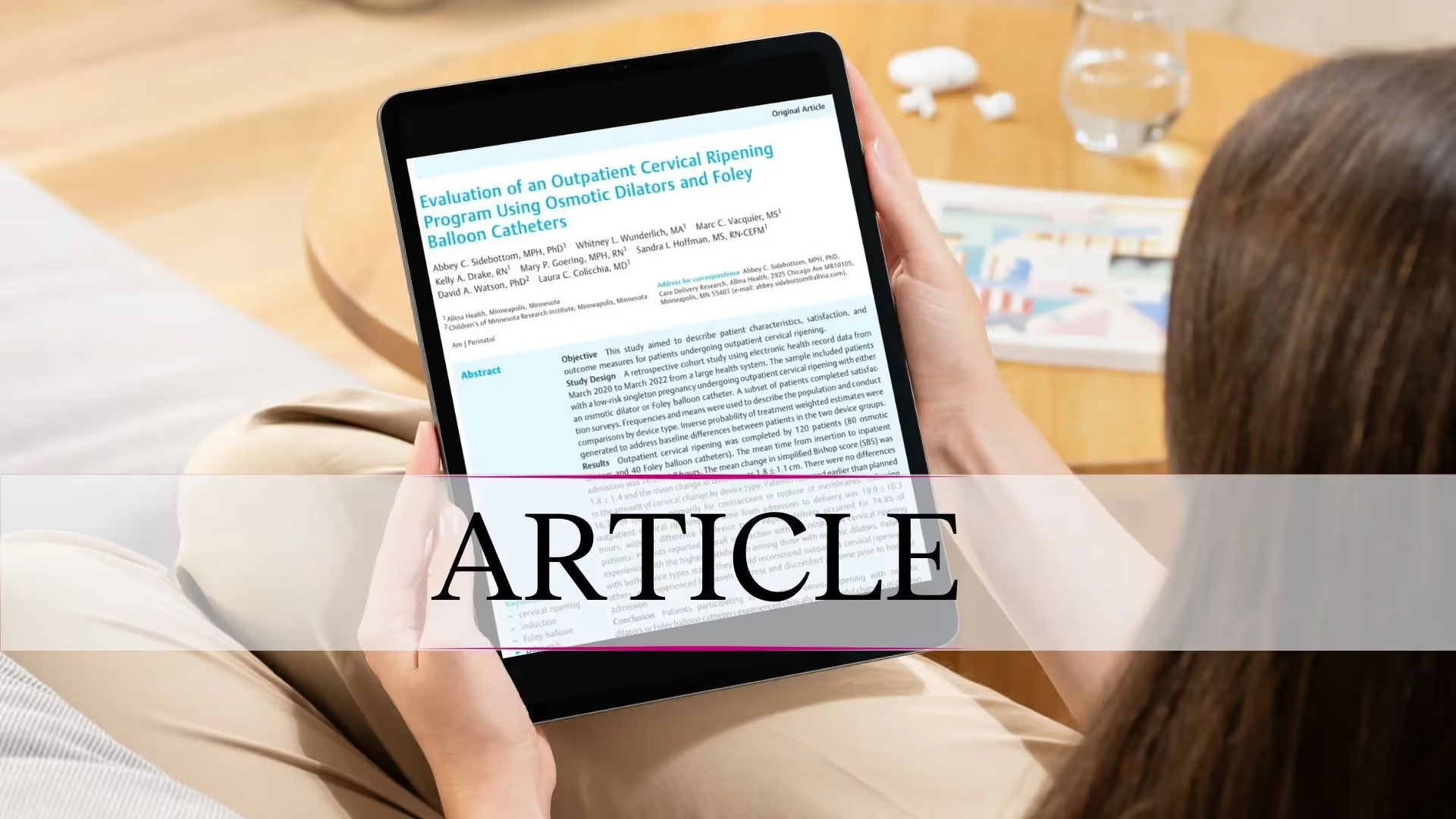
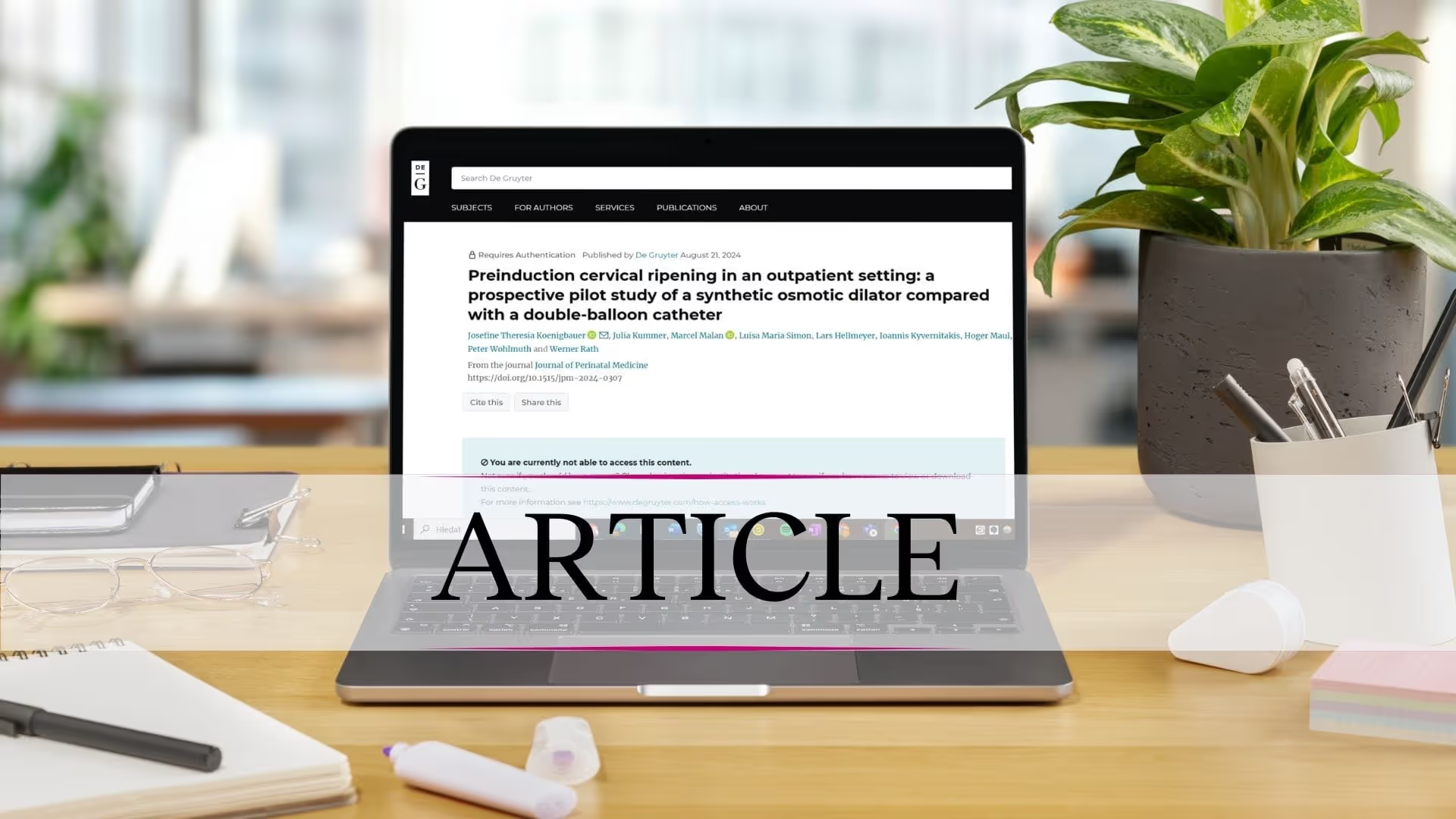
In a randomised outpatient trial, Wood and colleagues compared a synthetic osmotic dilator with balloon catheters and reported higher patient satisfaction and lower cervical ripening failure with the osmotic dilator, without prolonging time to birth.² In outpatient pathways, device failure is likely to translate into more unplanned reviews and fewer women completing ripening as planned.² ³
Real‑world UK experience echoes this. Over three years, Queen’s Hospital, a large maternity unit in Essex, increased their outpatient inductions from around 2% to 35–40%, using the synthetic osmotic dilator (DILAPAN‑S) as their primary cervical ripening method.⁷ ⁸
As consultant obstetrician Dr Chineze Otigbah explains, women “were coming in having their DILAPAN‑S and disappearing and coming back again up to 24 hours later.” ⁸ For the unit, “that 12 to 15 hours that they would be hanging around waiting for the DILAPAN‑S to be removed or rupturing membranes can be done at home.” ⁸
Cost reduction: when bed days really disappear
From a financial perspective, the mechanism behind OP IOL is not complicated. Each woman who undergoes cervical ripening at home instead of occupying an antenatal bed for 12–18 hours frees capacity for women in active labour.³ ⁵ At Queen’s Hospital, expanding OP IOL to 35–40% improved overall capacity by around 15%, translating into hundreds of freed bed days annually, without touching the bricks and mortar.⁸
To illustrate the scale, take a mid‑size UK maternity unit with 2,000 inductions per year:
- If 30% of IOLs shift to outpatient (around 600 women)
- × 1.5 antenatal bed days avoided per woman
- = roughly 900 bed days freed annually.
Depending on the unit cost assumptions, this could represent an annual amount in the region of £120,000 to £180,000 in avoided bed‑day costs. The actual figure will depend on local tariffs, staffing models and how telephone triage and follow‑up are organised, but the direction of travel is clear: when OP IOL truly reduces time spent in antenatal beds, it also reduces spend tied to those beds.⁶
Market behaviour tells a similar story: industry analyses suggest that around half of UK maternity units have now incorporated synthetic osmotic dilators such as DILAPAN‑S into their induction pathways, particularly in high‑volume services where capacity and cost pressures are most acute.⁷ ⁸
None of this proves that any single method is “the answer”, but it does suggest that units under pressure are using outpatient mechanical ripening as one of the levers in their capacity and cost strategy.³ ⁷
Patient experience: at home, but at what price?
Beyond time and money, OP IOL makes sense if it improves women’s experience.⁴ ³
The same HOME INDUCTION trial offers an important signal here: women in the mechanical arm had fewer painful contractions at home and fewer unplanned returns than those allocated to dinoprostone in an outpatient protocol.⁷ ⁸ Mechanical cervical ripening produces gradual cervical change without directly stimulating contractions before the planned time of review, and avoids systemic hormonal effects that can make women feel unwell at home.⁵
.png)
Design within the mechanical group also matters. In a randomised outpatient trial, Wood and colleagues compared a synthetic osmotic dilator with balloon catheters and reported higher patient satisfaction and lower cervical ripening failure with the osmotic dilator, without prolonging time to birth.² Clinically, this fits with what many services observe in practice: external catheters that protrude from the vagina and need taping can feel more intrusive during everyday activities at home, while fully internal devices tend to be less noticeable in day‑to‑day life.² ⁵
For women, that difference is not trivial. Being able to move, rest and use the bathroom without something dangling outside can shape how tolerable the whole process feels, as well as how likely they are to return earlier than planned.² ⁴
Dr Otigbah’s description of her patients’ reactions brings this into focus. “The women in our area are very keen to go home,” she said. “If we’ve assessed them and the baby is absolutely fine, we would much prefer them to be at home, because it’s best for them and their baby.” Reflecting on three years of using the synthetic osmotic dilator, she added:
“I can’t remember ever having a hyperstimulation that we needed to section using DILAPAN‑S. Women don’t have to be monitored continuously, they don’t have to have multiple examinations like previously, and they request less pain relief.”⁸
Fewer interventions, less monitoring and more time at home is a combination that is difficult to argue against from a patient‑experience standpoint – provided that safety and equity are maintained.⁴ ⁵
Where this leaves OP IOL – and what comes next
So, is outpatient induction a time saver or merely a time shifter? The outpatient trials and UK real‑world experience point in the same direction: OP IOL can free capacity, reduce bed‑day spend and offer a better experience – but only if the outpatient method does not generate avoidable safety concerns, discomfort or early returns.¹ ³ ⁸
If your unit has already tried OP IOL – or decided against it – where have you found the main friction: patient selection, choice of method, or the practical logistics of making the pathway work outside the ward?
In the next part of this series, we will move from service pressures to women’s voices: what they actually want from induction – and how methods and pathways can be designed to minimise pain, intrusion and time on the ward while keeping babies safe.
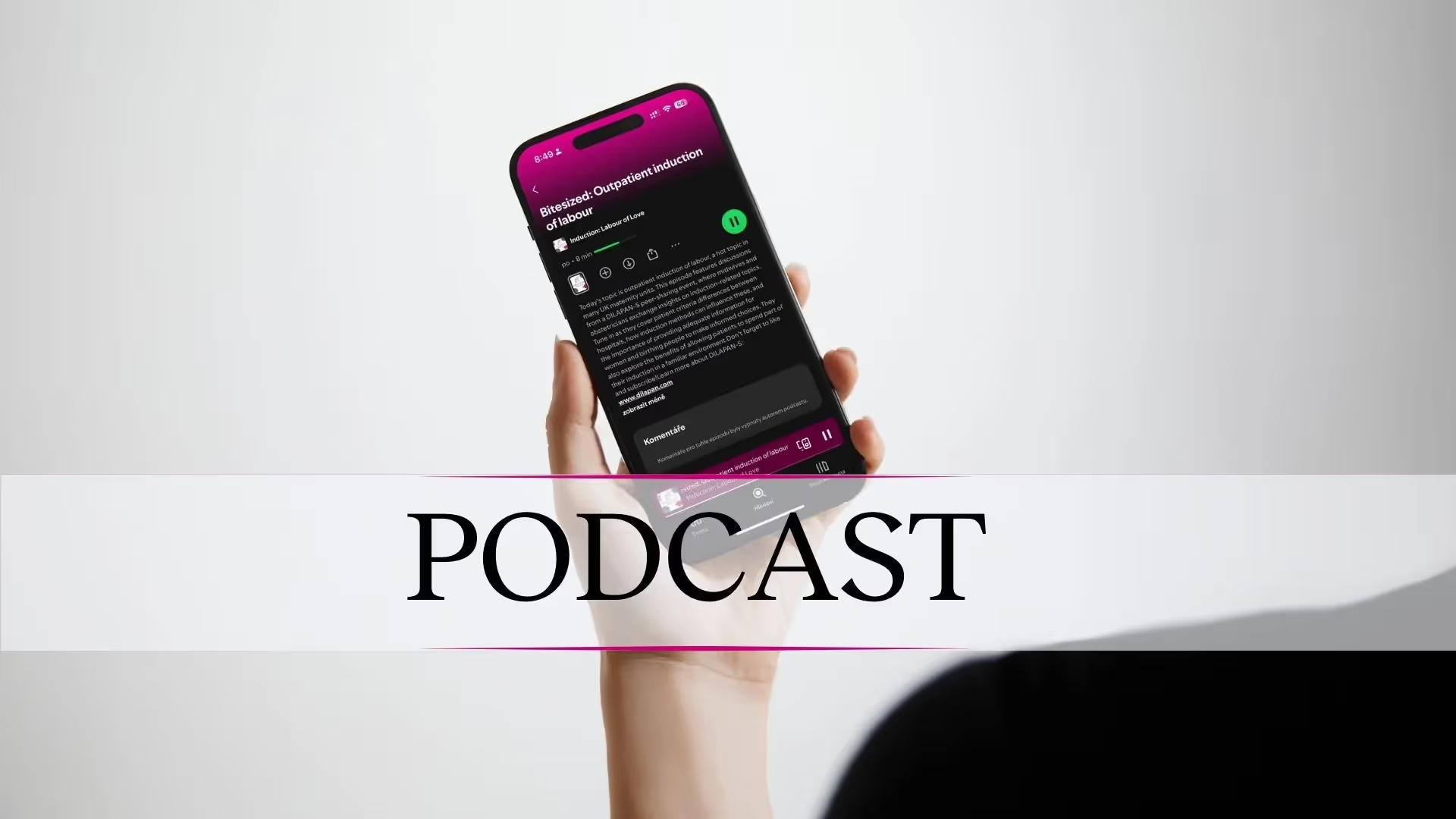
For a wider conversation on the pressures reshaping UK induction pathways, the Induction: Labour of Love podcast features candid discussions between midwives and obstetricians navigating these very challenges. Further clinical evidence and resources are available at dilapan.com.
References
- Nicholson SM, Flood K, Dicker P, et al. Outpatient elective induction of labour at 39 weeks’ gestation (HOME INDUCTION): an open-label, randomised, controlled, phase III, non-inferiority trial. EClinicalMedicine. 2024;74:102741. Available from: https://pubmed.ncbi.nlm.nih.gov/39114276/
- Wood RL, Bluemm C, Lassey SC, Little SE. Cervical balloon catheter vs Dilapan-S for outpatient cervical ripening: a randomized controlled trial. Am J Obstet Gynecol MFM. 2025;7(6):101608. Available from: https://pubmed.ncbi.nlm.nih.gov/39818274/
- Dong W, Jozwiak M, Ten Eikelder MLG, et al. Inpatient versus outpatient induction of labour: a systematic review and meta-analysis. BMC Pregnancy and Childbirth. 2020;20:382. Available from: https://pmc.ncbi.nlm.nih.gov/articles/PMC7325658/
- Harkness M, Yuill C, Cheyne H, et al. Experience of induction of labour: a cross-sectional postnatal survey of women at UK maternity units. BMJ Open. 2023;13(5):e071703. Available from: https://pubmed.ncbi.nlm.nih.gov/37160383/
- National Institute for Health and Care Excellence (NICE). Inducing labour (NG207). Available from: https://www.nice.org.uk/guidance/ng207
- Whelan C, Kenny LC, Khashan AS, et al. Costing the impact of interventions during pregnancy in the UK: a systematic review of economic evaluations. BMJ Open. 2020;10:e040022. Available from: https://pmc.ncbi.nlm.nih.gov/articles/PMC7604861/
- AG Health. How many hospitals use DILAPAN-S & why it’s becoming a preferred option for induction of labour. Available from: https://www.aghealth.co.uk/post/how-many-hospitals-use-dilapan-s-why-it-s-becoming-a-preferred-option-for-induction-of-labour
- Otigbah C. Managing increasing induction of labour demand [video]. YouTube; 2023. Available from: https://www.youtube.com/watch?v=mb2E8CqR4bU
.png)
.png)
.png)
.png)
.png)


.avif)