.png)
The cervix has changed. The Bishop score has not. What now? There may be meaningful dilatation or other clinically relevant cervical change. The next step may be clinically possible. Yet the total score says: not ready [1,3].
The Bishop score is familiar territory: a five-part bedside assessment designed to guide induction decisions [1]. But familiarity can make a tool look more definitive than it is.
When Edward Bishop introduced pelvic scoring in 1964, his question was not whether cervical ripening had been successful. His aim was to identify women most likely to have a successful elective induction with the methods available at the time — principally amniotomy and oxytocin [1].
More than 60 years later, the score is used not only to assess cervical readiness, but also as a marker of ripening success. That shift is understandable. But it raises a reasonable question: should a tool designed to predict induction success become a rigid pass-or-fail test for cervical ripening? [1,3]
Put four experienced clinicians in front of the same cervix. Would they all give the same Bishop score? Probably not [2].
That is not a criticism of clinical examination. It is a reminder that a score built partly on palpation should inform judgement — not replace it [2].
And when mechanical and pharmacological ripening methods change the cervix through different pathways, one question becomes difficult to ignore: are we using the right definition of successful ripening? [3,4]
A threshold — not a finish line
A Bishop score of 6 or below is not a verdict on the cervix. It is a decision point [3]. At this stage, the clinical question is not simply whether more ripening is needed. It is which ripening approach is most appropriate for this woman, this pregnancy and this pathway.
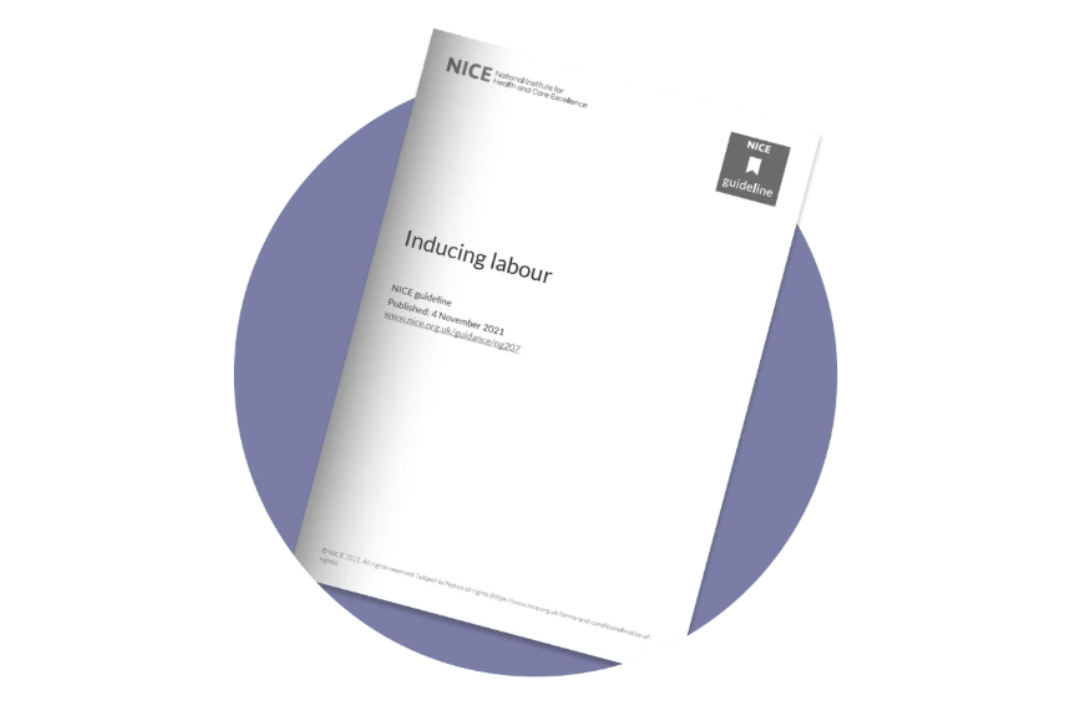
NICE recognises mechanical methods, including osmotic cervical dilators, as an established non-pharmacological option within an individualised approach to labour induction [3]. That matters because the method selected shapes more than the route to induction. It may also shape what meaningful cervical progress looks like afterwards [3,4].
One score. Different cervical changes.
Mechanical and pharmacological methods are not interchangeable interventions.
Prostaglandins influence cervical remodelling and may also initiate uterine activity. Synthetic osmotic dilators work by absorbing fluid and expanding within the cervical canal, producing gradual mechanical dilatation and tissue softening. It is therefore reasonable to ask whether they should be expected to produce the same Bishop-score profile.
At University Hospitals of Morecambe Bay NHS Foundation Trust, Education Midwife Alice Singleton described a familiar implementation challenge: following DILAPAN-S insertion, teams sometimes saw meaningful dilatation but persistent cervical length. The total score could remain low, even when the cervix was suitable for the next step [4].
Her conclusion is deliberately direct: “Bishop scoring is subjective and it doesn’t reflect DILAPAN-S accurately.” [4]
This is not an argument to abandon assessment. It is an argument to assess with purpose. If a method has achieved sufficient dilatation for a safe, clinically appropriate amniotomy, should a remaining component of the score automatically override that finding?
What does successful ripening look like?
Too often, “successful cervical ripening” is used as shorthand for a particular Bishop score. But success may be more meaningful when it is linked to the goal of the specific stage of induction:
- Has the cervix changed enough for the next planned intervention?
- Can the pathway proceed without an additional ripening agent?
- Are maternal and fetal observations reassuring?
- Has the method avoided unnecessary uterine hyperstimulation?
- What are the implications for time to active labour, vaginal birth and the woman’s experience?
These are exactly the outcomes that recent comparative evidence has started to test directly, rather than relying on a score as a proxy [1,3].
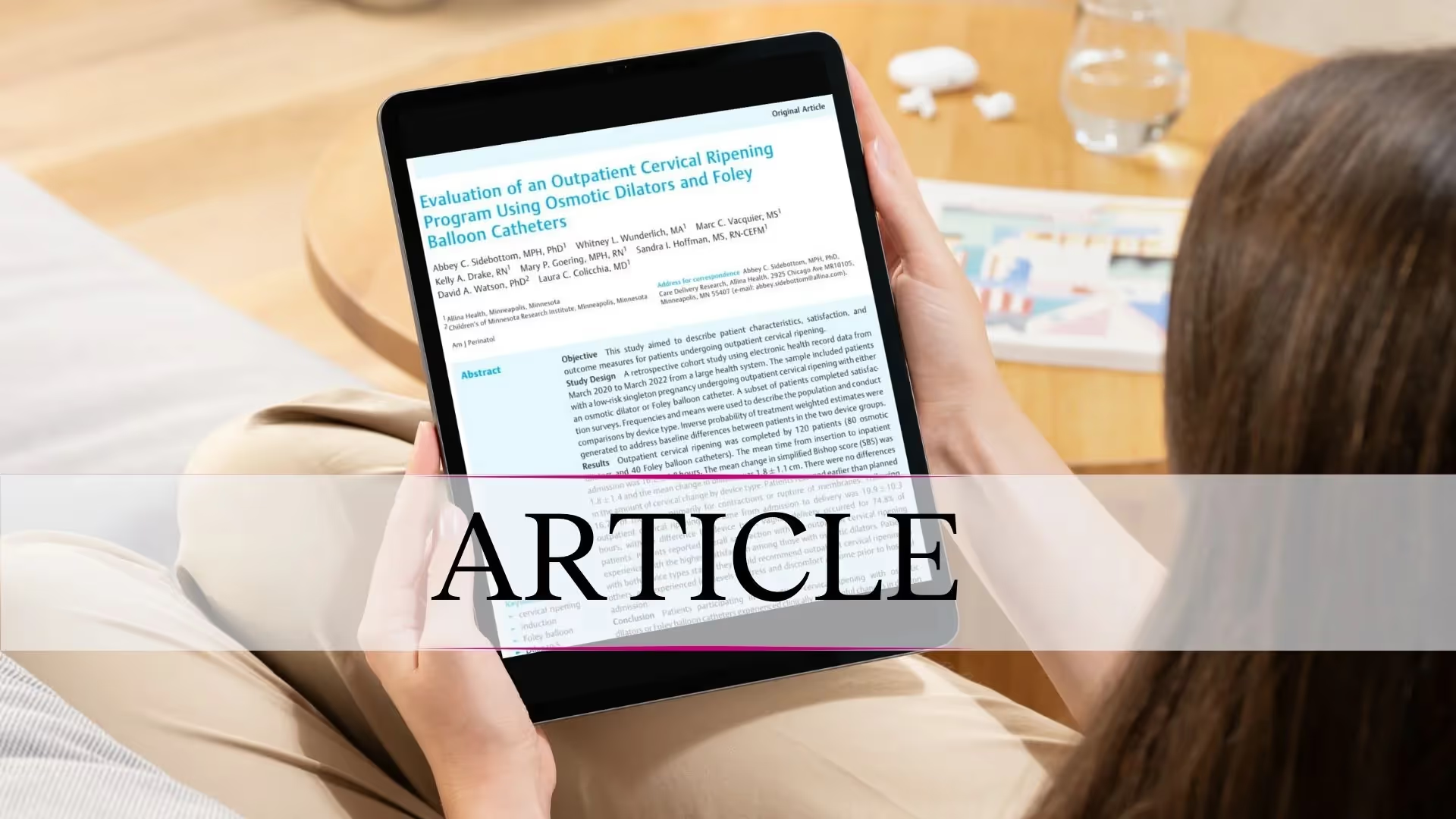
A 2025 individual patient data meta-analysis of four randomised controlled trials, involving 1,731 women, found comparable caesarean delivery rates between DILAPAN-S and alternative mechanical or pharmacological ripening methods — 28% versus 30%, respectively — alongside lower reported pain and fewer ripening-related complications in the DILAPAN-S group [5].
The message is not that one method will suit every woman, pathway or maternity unit.
It is that final outcomes such as safety, vaginal birth and informed choice cannot be reduced to a single post-ripening number [1,3].
A low score is not a failed induction
The distinction becomes especially important when we use the phrase failed induction.
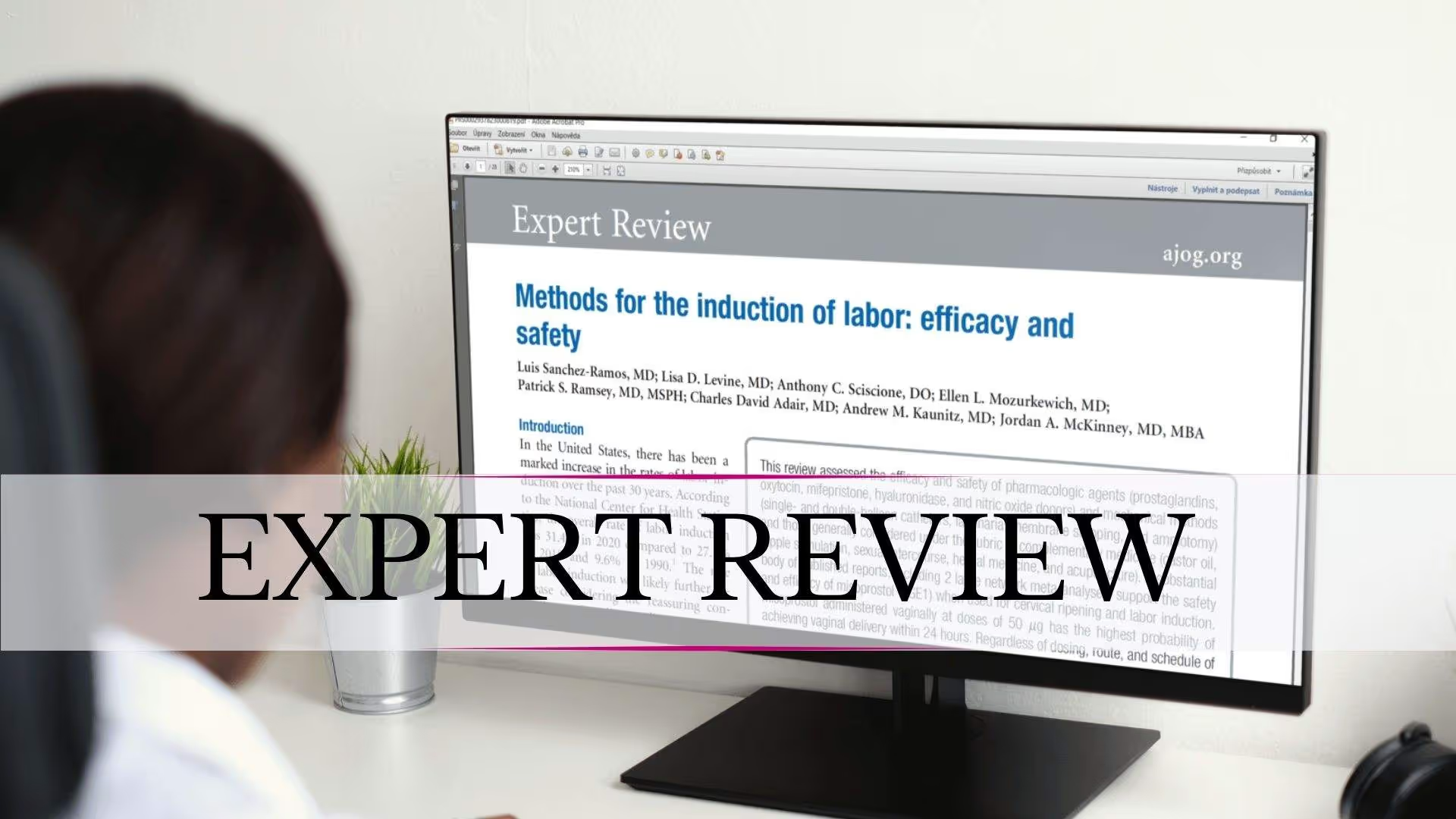
A low score after ripening does not automatically mean that the induction has failed. This point was recently made explicitly by Essa and colleagues [6]. They recommend proceeding with amniotomy and oxytocin after cervical ripening even when the Bishop score remains unfavourable, provided the clinical situation is otherwise stable. They further argue that caesarean birth for failed induction should not be considered until after amniotomy and 18–24 hours of oxytocin infusion [6].
That is an important distinction. A persistently low Bishop score may signal the need for careful reassessment. It does not, on its own, establish that the induction pathway has failed [3,6]. Nor does an unsuccessful initial treatment cycle automatically mean that caesarean birth is the only next step.
NICE defines unsuccessful induction as labour not starting after one cycle of treatment. It then calls for full reassessment of the woman, pregnancy and fetal wellbeing, followed by a discussion of the options: a rest period, expectant management, a further attempt at induction or caesarean birth [3]. WHO makes the point even more clearly: failed induction of labour does not necessarily indicate caesarean section [8].
The clinical lesson is straightforward: induction is a pathway, not a single examination — and certainly not a single score [1,3,6,7].
The question worth asking
A Bishop score can guide the next decision. It should not make the decision for us. Rather than asking only, Has the cervix reached 6?, perhaps the more useful question is:
Has this method achieved the cervical change needed for the next safe and appropriate step in this woman’s induction?
That is not lowering the bar. It is making sure we are measuring the outcome that matters.
How does your unit define successful ripening: by a score, by readiness for the next step, or by the eventual birth outcome?
References
- Bishop EH. Pelvic scoring for elective induction. Obstetrics & Gynecology. 1964;24(2):266–268. PMID: 14199536.
- Faltin-Traub EF, Boulvain M, Faltin DL, Extermann P, Irion O. Reliability of the Bishop score before labour induction at term. European Journal of Obstetrics & Gynecology and Reproductive Biology. 2004;112(2):178–181. doi:10.1016/j.ejogrb.2003.05.017.
- National Institute for Health and Care Excellence. Inducing labour: NICE guideline NG207. London: NICE; 2021. Available from: https://www.nice.org.uk/guidance/ng207
- Singleton A. Educating Everyone on DILAPAN-S: Insights from Lancaster’s Education Midwife. Webinar. DILAPAN-S YouTube channel; 17 April 2025.
- Saad AF, Pedroza C, Gavara R, et al. Dilapan-S vs standard methods for cervical ripening in term pregnancies: an individual patient data meta-analysis. American Journal of Obstetrics & Gynecology MFM. 2025;7(1):101583. doi:10.1016/j.ajogmf.2024.101583.
- Essa A, Jan SA, Schoen CN. Together or separated in time? Two simultaneous cervical ripening agents perform better than one for labor induction. American Journal of Obstetrics & Gynecology MFM. 2025;7:101770. doi:10.1016/j.ajogmf.2025.101770.
- World Health Organization. WHO recommendations for induction of labour. Geneva: World Health Organization; 2011. Available from: https://iris.who.int/handle/10665/44531
.png)
.png)
.png)
.png)
.png)
.png)


.avif)