.png)
We read the NHS plans for you. These are the five questions likely to shape induction next.
By 2027, the question facing maternity services will not be whether induction of labour has become routine. It already has. In the National Maternity and Perinatal Audit’s 2023 snapshot, “33.9% of women and birthing people” experienced induction of labour; 29.7% of those induced gave birth by caesarean. [1]
But the NHS it sits within is changing. Services will be expected to improve productivity, deliver more care beyond hospital walls where appropriate, confront inequality and listen more closely to women’s experience. [2]
So the question is no longer simply whether an induction pathway works. It is whether it is built for what the NHS will ask of it next.
Over this series, we have questioned the time induction takes, where it happens, how it feels, how it ends — and even how we score the cervix before it begins. Perhaps it is time to ask the bigger question: what will make an induction pathway fit for 2027?
1. What value does this pathway create — and for whom?
When budgets tighten, the first number people reach for is often the price on the box. But induction and cervical ripening are not box-price decisions.
The ripening agent is only one part of the pathway. The larger question is what happens around it: hours on the antenatal ward, monitoring, midwifery and obstetric time, repeat assessments, analgesia, unplanned return related to outpatient ripening and the point at which a woman is ready for the next clinical decision. [3, 4]
A pathway that keeps a woman in hospital because “that is how we have always done it” will face a harder question: what value is it creating — for her, for the team and for the wider service?
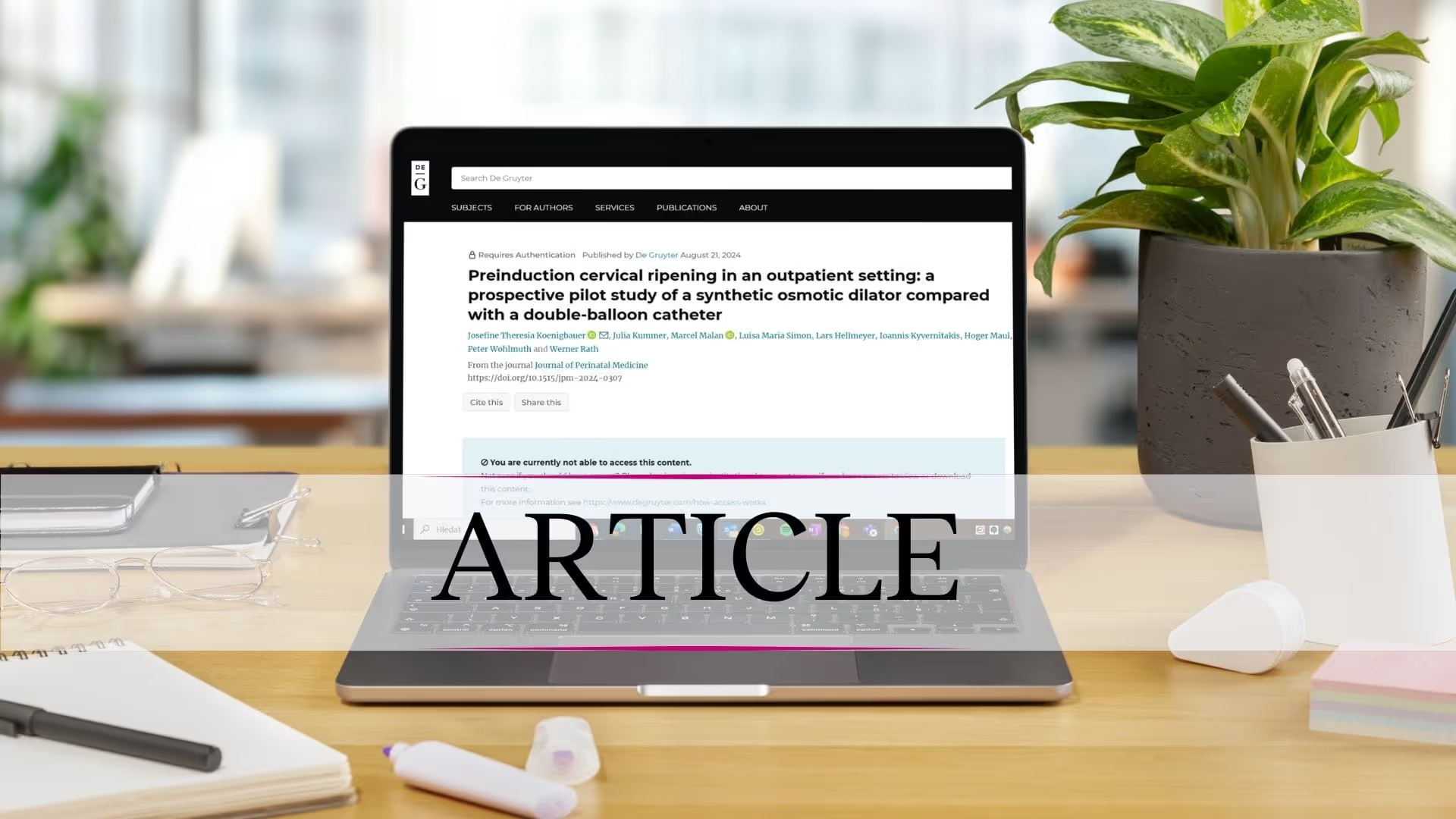
A UK cost-consequence model comparing DILAPAN-S with a dinoprostone vaginal insert estimated broadly comparable overall costs from admission to birth, while projecting less midwifery and obstetrician time with the osmotic dilator. [3] The results came from a model, not a real-world comparative study, but they make an important point: when the whole pathway is counted, acquisition cost cannot be the whole economic story.

A lower purchase price can look attractive in isolation. But if it creates more monitoring, reviews, ward time or pressure on a stretched team, the apparent saving may disappear before the woman reaches the next step in her care. Earlier in this series, we asked what 2.4 hours of midwifery time could mean for a busy team. In 2027, that questionmay become harder to avoid.
2. Can the pathway work once a woman leaves the ward?
The next phase of outpatient induction will not be about asking whether women can go home. It will be about whether services can design a pathway that remains coherent once they do.
Care closer to home is a major NHS direction of travel. [2] But “home” is not automatically simpler, and discharge is not itself a measure of success.
A woman going home during cervical ripening needs more than a telephone number and return instructions. She needs a method that allows her to move, sleep, shower and continue ordinary life with as much comfort and normality as possible. These are not peripheral details: they shape her sense of control and how she experiences induction.
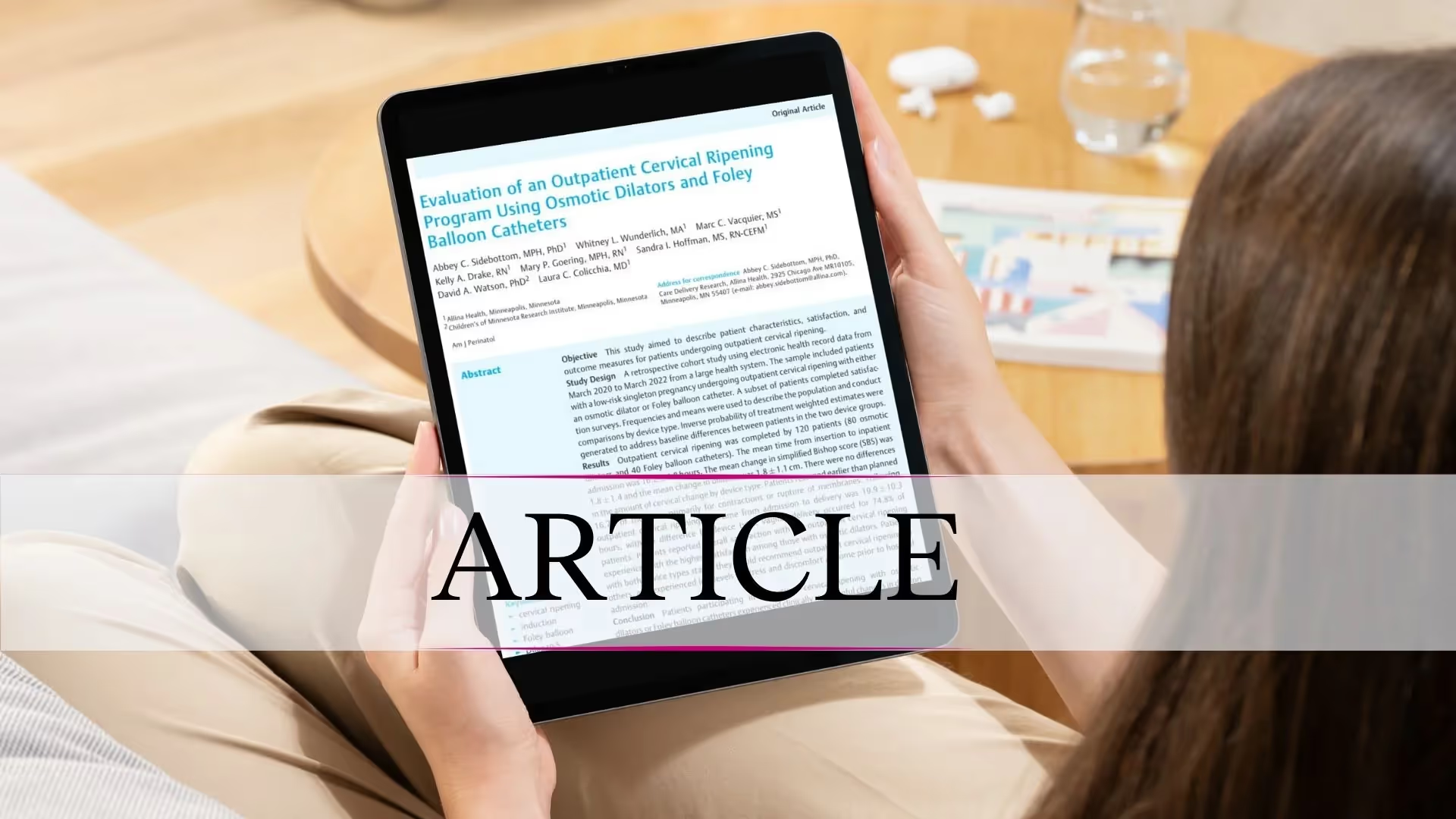
Studies of osmotic dilators have reported higher satisfaction with sleep, relaxation and desired daily activities than other mechanical methods. [5] An outpatient randomised comparison with a dinoprostone vaginal insert also reported fewer early returns before planned review in the DILAPAN-S group, alongside fewer reports of regular painful contractions at home. [4]
The question for 2027 is not adoption versus rejection. It is whether the pathway works outside the ward — rather than simply shifting time, uncertainty and workload elsewhere.
3. Is choice real — or merely available on paper?
Any future induction pathway will need to ask who is offered which option, who can realistically use it, who is heard when they are worried, and whose data are missing from the dashboard.
This is not theoretical. MBRRACE-UK’s latest data for England reported a maternal mortality rate of 32.42 per 100,000 maternities among Black women between 2022 and 2024, compared with 11.93 among White women. [6] Maternity pathways do not operate on a level playing field.
A pathway can offer the same option to every woman and still create very different realities. Transport, housing, language, digital access, caring responsibilities, the ability to return promptly and confidence to seek help can all determine whether an option is genuinely usable.
Outpatient induction makes this especially visible, but the principle applies across the entire pathway. Services must ask not only, “Was this option offered?” but also, “Could this woman realistically use it?”
For induction, reducing inequality means more than placing several cervical-ripening methods on a protocol. Women need clear, accessible information about why induction is recommended, what each option involves and what life with that method may look like.
A choice is only meaningful when a woman can understand it, weigh it and realistically live with it.
4. Are women’s voices changing the pathway — or just the report?
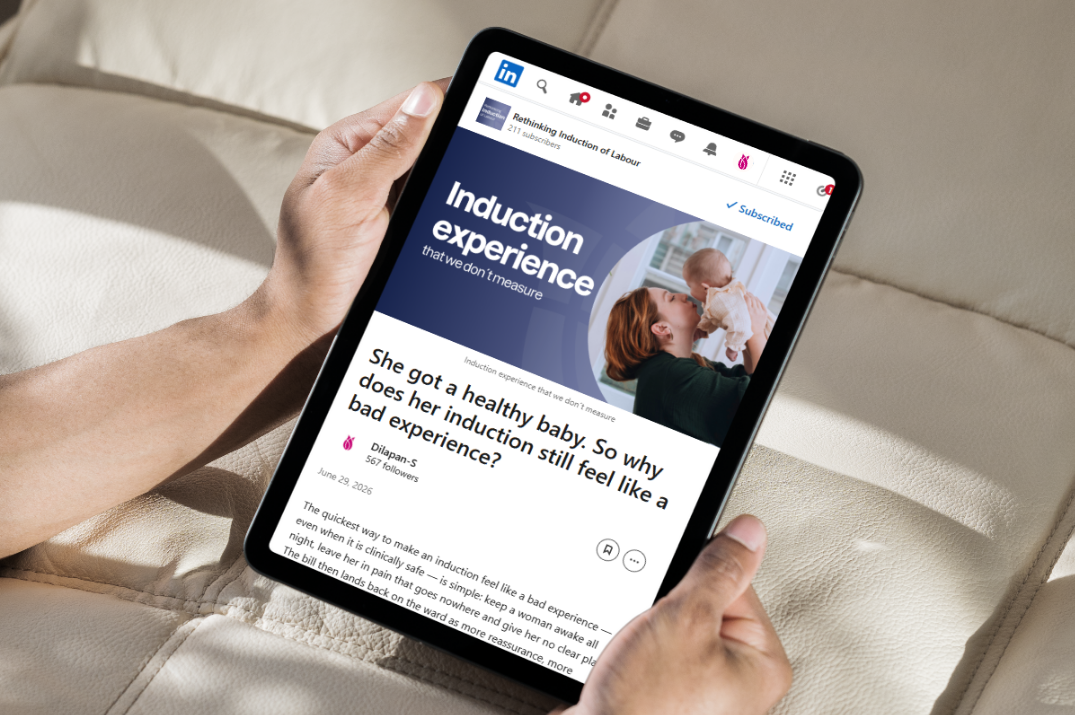
“She had a healthy baby” should not end the conversation — especially when the induction still feels like a bad experience.
Baroness Amos’s investigation found that women and families were too often not listened to, their concerns were dismissed and they were excluded from decision-making. [7] By 2027, Trusts will need to show that women’s voices change pathways — not simply how feedback is collected.
For induction and cervical ripening, that means making the pathway understandable before it begins: why induction is recommended, what the first 12–24 hours may involve, and who will make the next decision with the woman.
It also means talking openly about cervical-ripening methods: how they differ, what each may involve and what each may offer in practice. Listening to women means treating those practical differences as part of the decision, not as details explained after it has been made.
5. Does the method serve the pathway — or dictate it?
Method choice matters beyond the cervix. It affects monitoring, time, mobility, setting, review points and the workload created around the woman. [3, 4, 5]
No method can resolve a fragmented pathway. But a pathway cannot be redesigned intelligently if method choice is treated as an afterthought. The useful question is not which method “wins” in isolation, but whether it supports the service a Trust is trying to build.
Mechanical cervical ripening, including DILAPAN-S, should be considered in this full pathway context — not only against one final outcome. As we explored in Beyond Bishop, a score can inform a decision, but it cannot tell the whole story. Neither can mode of birth.
By 2027, maternity services will be judged not only on whether they can deliver induction, but on whether they can deliver it consistently, accountably and in a way women recognise as care designed with them rather than simply done to them.
The question is not whether induction pathways need to evolve. It is whether we will redesign them before the system forces us to.
Which pressure will reshape induction first in your service: workforce, finances, equity, women’s experience — or the demand for care closer to home?
References
[1] NMPAProject Team. National Maternity and Perinatal Audit: Induction of LabourSnapshot Audit. Based on births in NHS maternity services in England, Scotlandand Wales during 2023. London: Royal College of Obstetricians andGynaecologists; 2025.
[2] NHS England. Medium Term Planning Framework: DeliveringChange Together 2026/27 to 2028/29. NHS England; 2025.
[3] Walker KF, Zaher S, Torrejon Torres R, Saunders SJ,Saunders R, Gupta JK. Synthetic osmotic dilators (DILAPAN-S) or dinoprostonevaginal inserts (Propess) for inpatient induction of labour: a UKcost-consequence model. European Journal of Obstetrics & Gynecology andReproductive Biology. 2022;278:47–53.
[4] Nicholson S, Flood M, et al. Outpatient electiveinduction of labour at 39 weeks’ gestation (HOME INDUCTION): an open-label,randomised, controlled, phase III, non-inferiority trial. The LanceteClinicalMedicine. 2024;73:102699.
[5] Saad AF, et al. A randomised controlled trial ofDILAPAN-S versus Foley balloon for preinduction cervical ripening (DILAFOLtrial). American Journal of Obstetrics & Gynecology.2019;220(3):275.e1–275.e9.
[6] MBRRACE-UK. Saving Lives, Improving Mothers’ Care 2026:Lessons Learned to Inform Maternity Care from the UK and Ireland ConfidentialEnquiries into Maternal Deaths and Morbidity 2022–2024. National PerinatalEpidemiology Unit, University of Oxford; 2026.
[7] Independent National Maternity and NeonatalInvestigation. Final Report and Recommendations. Chair: Baroness Valerie Amos;2026.
.png)
.png)
.png)
.png)
.png)
.png)


.avif)